Tuesday, June 4, 2019

Event 3: Meteorite Gallery

Meteorites formed as asteroids melted
while crossing Earth's atmosphere
My third event was the Meteorite Gallery in the Geology building at UCLA. Considering that this was my second time at the event, on a day without a docent, I thought it would be lacking as there would be no expert to guide me through the exhibit. However, based on the perspective provided to me through the class, it allowed me to develop my own opinions, and connect these beautiful objects to concepts and ideas outside of the realm of just science.
A tektite, melted on impact with the Earth

The most notable part of the exhibit to me are how meteorites are created. Aside from common earth rocks, meteorites are recognizable as they are forged in different conditions, composed of different materials, and thus coming to Earth as a unique fragment of space in human eyes.


When drawing from the notion of space, it seems ironic that people are so fascinated with the notion of space, when it seems that scraps of rock are the only parts of space that humans have been physically able to interact with. When you actually think about this, it seems to bring up the question of whether people are more fond of the idea of space, rather than its contents, when looked at from a nonscientific point of view.
Proof of attendance with
one of the gallery exhibits
When working with science in art, it seems that a lot of artists have knowledge about the material that they manipulate, whereas when thinking about space, meteorites and such are saved for exhibits, rather than for sculpting or manipulation. Instead, artists working with space don't necessarily have physical access to material, but rather complete creative freedom. Instead of portraying parts of life in their perspectives, it seems powerful that artists can perceive life in a whole new realm, separate from human experiences and limitations.


Sunday, June 2, 2019

Week 9: Space and Art


Image result for copernicus heliocentric
Development of the heliocentric model
Regarding space exploration in art, the productions seem more concerned with the possibilities, rather than just perceptions of what already exists. Even from the earliest days, when Copernicus was developing the heliocentric model for space, he was not trying to model the existing perception of space, but rather on what he views space to be. Like other topics, space provides a topic that allows artists to display their own perception, but unlike many of the other subjects we have studied, I feel as though there is much more uncertainty with the subject of space, and the artwork produced is focused on another time.
Space as a topic remains very fluid in time. It seems like one of its most appealing facets is its ability to become disconnected from human life, creating endless possibilities within the infinite unknown. 
Image result for gotg
Lack of limits allows for development
of endless possibilities, in terms of
characters and technology

 When one accomplishment is made in space, new doors are opened and exploration continues, such as the progression of how space travel began with Laika, then people in orbit, then people onto the moon. In a way, space represents what can possibly be and display one’s perception of human potential. It is a theme that warps perspective, where humans can feel like kings of their own universe, or irrelevant specks in a vast space, which thus allows artists to develop many unique images to reflect such varying perceptions.
Possible creations of space
elevators through nanotech

Yet in the domain of space, all the tools we have learned about can still be used to explore. The incorporation of nanotech allows for the possibility of space elevators, while issues with biotech may arise in the same field as testing in space may become a controversial issue. The scope of space is just so fascinating, and possibilities seem endless.


Sources:

FoustTuesday, Jeff, et al. “When Space and Art Intersect.” The Space Review: When Space and Art 
Intersect, www.thespacereview.com/article/1460/1.

Insider, Business. “From 1900 to 2013: The Evolution of Outer Space on the Big Screen.” TheJournal.ie, www.thejournal.ie/space-movies-film-history-1117934-Oct2013/.

Online, UC. “Space pt6.” YouTube, YouTube, 30 May 2012, www.youtube.com/watch?v=VYmOtFjIj0M.

Online, UC. “8 Space pt3 1280x720.” YouTube, YouTube, 29 July 2013, www.youtube.com/watch?
v=4WOqt_C55Mk.

Wassmer, William. “Using Nanotechnology to Build a Space Elevator.” AZoNano.com, 23 Dec. 2015, www.azonano.com/article.aspx?ArticleID=4011.


Sunday, May 26, 2019

Week 8 Nanotech and Art


Quantum dots glow different colors under UV light depending on their size. Dennis and her colleagues are developing dots that will respond to deep red and near-infrared light—same idea, not as pretty.
Shrinking molecules to the size of nano-particles gives rise to new properties
In this picture, quantum dots have different colors at different sizes under UV light

This week’s reading brings up the use of nanotechnology, which then begins to parallel biotechnology in the issues that may arise in society. Awareness of nanotechnology in everyday products raise the same ethical questions that genetic modification in organisms do. The uncertainty of the possible dangers of nanotechnology indisputably possess some level of threat, yet the possibilities provide so much hope and opportunity for humankind. By manipulating the size of different materials, physical properties can be changed, which creates endless avenues to explore what the different outcomes may be.


phenomenon-Glow-With-Flow-631.jpg
Roman use of nano-particles to  create the different perceptions of gold
Once again, technological advances seem to give new medium for artists, with the possibility of manipulating the self-assembly of DNA and other nanoparticles. This is also not new, as in history, objects such as the Lycurgus cup and stained glass are both examples of the physical appeal of nanoparticles. However, it remains to be seen what possible uses nanoparticles may have in art, and what ethical concerns may arise alongside new practices.

Figure 4.
Beautiful patterns in nature arise as a result of nanoparticles as seen in this butterfly wing
 Regarding the use of nanotechnology in art, it seems amazing that natural processes have created such beautiful structures that also have practical uses for life. In a sense, it raises the chicken and the egg question: have humans evolved to recognize beauty in products of self-assembly and organization, or have the natural products just evolved over time, with physical appeal playing a role in selection? Similar questions arise, not just with patterns in structures from nanoparticles, but also from other subjects that we have studied such as the golden ratio.  It is an interesting question how “coincidences” in nature appear so often, and I wonder if art and the structure of human pattern development help us to recognize and appreciate these “coincidences” much more often.

Sources:

Burg, Stephanie L, and Andrew J Parnell. “Self-Assembling Structural Colour in Nature.” Journal of Physics: Condensed Matter, vol. 30, no. 41, 2018, p. 413001., doi:10.1088/1361-648x/aadc95.

Moran, Barbara. “Nanotechnology.” Research What Are Quantum Dots Comments, www.bu.edu/research/articles/quantum-dots-breast-cancer-tumors/.

Online, UC. “Nanotech Jim pt4.” YouTube, YouTube, 21 May 2012, www.youtube.com/watch?v=yHCuZetAIhk.

Online, UC. “Nanotech Jim pt5.” YouTube, YouTube, 21 May 2012, www.youtube.com/watch?v=4OWc8nmHJmY.

“This 1,600-Year-Old Goblet Shows That the Romans Were Nanotechnology Pioneers.” Smithsonian.com, Smithsonian Institution, 1 Sept. 2013, www.smithsonianmag.com/history/this-1600-year-old-goblet-shows-that-the-romans-were-nanotechnology-pioneers-787224/.


Saturday, May 25, 2019

Event 2: Sound and Science Symposium

A close up look at the wiring and setup
of the kitchen layout
Dillon explaining his process
of discovery
My second event was Dillon Bastan’s electroacoustic instrument performance/sculpture as part of the Sound and Science Symposium. Of all the units we have covered so far, his performance mostly reflected robotics in art, and was interesting as it focused on sound rather than on visuals like most of the examples of art we see in the lectures.

I would recommend this event, because as I arrived early, it gave me a great opportunity to talk with Dillon and receive more insight into his art. His understanding of coding and electrical engineering was self-developed to build the foundation for his art projects, which I found amazing, because this perspective seems slightly unconventional in music. By talking to Dillon, I feel as though gained much more insight into ones’ motivations to incorporate the world of science into the world of art. He was also motivated by the natural sounds that would go on in the kitchen, hoping to place emphasis on this as he amplified the sounds and delivered them to the audience in his performance: simply making a salad and a smoothie, letting the kitchen appliances and tools speak for themselves. This process of discovering patterns of sound in daily life remind me of the processes embodied in the scientific method.

Proof of attendance as Dillon
was setting up the appliances
The more I experience in this class, the more it seems to me as though understanding is rooted in science, while expression is rooted in art. The processes and mechanisms used in art represents the science, the technology. Conveying a message and being able to share perspective is art. As I continue to learn and visit events, I begin to apply this understanding to my own life, wondering if an understanding of art can contribute to teaching math in my future. Will my understanding of concepts be used in creating a bigger picture, delivering the material in a natural and cohesive manner that incorporates it as a part of a students' daily life?

Sunday, May 19, 2019

Week 7: Neuroscience and Art

Image result for psychoanalysis
The brain separated into its different regions
The incorporation of art and neuroscience seems different from the other topics we covered in class. Different from robotics, math, and MedTech; neuroscience seems to be a naturally beautiful, rather than a component of science being used for art. The neural networks, LSD, cocaine seemed to play purposes ingrained in art, rather than being repurposed for the sake of art. I found it interesting how Ramon y Cajal said only artists are attracted to science, and the left brain and right brain were joined together. Once again, it is drawn back to the incorporation of the two cultures and how art and science are naturally ingrained in one another. 
Image result for brain networks
A brain network visualized by computers

Image result for lsd trip
Tripping on LSD can be beautiful in one's mind
allowing them to view the world differently
              Regarding the different forms of psychoanalysis, I find it interesting how Young’s view relates to epigenetics. In a class I took for Biotechnology in Society, we studied epigenetics, which showed how people had certain genetic code at birth, but only regulation was changed throughout life. This is like the existence of a birth layer of unconsciousness, where the dreams and symbols change over time.  To me I find it interesting how from human birth, we can have some parts of our lives predetermined. This is relevant in daily life, as people follow horoscopes, and believe in concepts that predetermine our personalities based on time of birth or other concepts.
Another aspect that is important is the incorporation of LSD and cocaine into art. The description of LSD given as seeing the world in a different perspective makes it seem indicative of what art does; art lets people observe a different perspective of the world, and come up with their own understanding. By enabling a different state of mind, it seems possible for people to come up with a new incorporation of art.


Sources:
Cohen, Mark Ph.D. (2012, May 12). Neuroscience.  https://www.youtube.com/watch?time_continue=255&v=eDq8uTROeXU. /
Online, UC. “Neuroscience-pt2.Mov.” YouTube, YouTube, 17 May 2012, www.youtube.com/watch?v=TFv4owX3MZo.
Online, UC. “Neuroscience-pt2.Mov.” YouTube, YouTube, 17 May 2012, www.youtube.com/watch?v=TFv4owX3MZo.
Online, UC. “Neuroscience pt3.” YouTube, YouTube, 16 May 2012, www.youtube.com/watch?v=E5EX75xoBJ0.
Jung, Carl Gustav. "The spiritual problem of modern man." Modern man in search of a soul (1928): 196-220.


Sunday, May 12, 2019

Week 6: Biotech and Art


I believe that life can be a valid expressive medium, open many different avenues for conversations regarding different parts of society. From the first video lecture, I found Eduardo Katz very interesting because of the different results that came from using the GFP bunny as artworks, bringing up conversation around appreciation of life, and social normalcy. 
Image result for gfp bunny
Eduardo Katz GFP Bunny
This also brings up dialogue between disciplines as Professor Vesna mentioned. Inherent in using transgenics, mutilations, recombinance,  and selective breeding are the implications that these techniques not only have a practical scientific use, but serve to tell people something much more about their place in society, amongst other species that are composed of the same building blocks. All life follows the same central dogma to survive and grow, so the way humans interact with other life forms speaks volumes about current values.


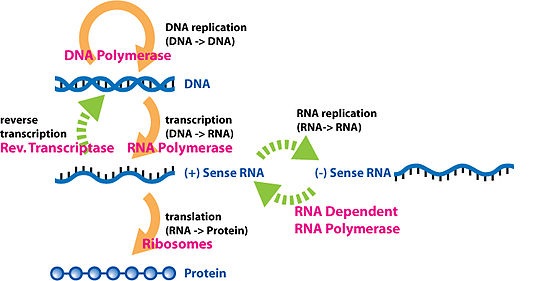
Image result for central dogma
Central to all life, the central dogma
that governs genetics and biotech in a sense

Opposition that may exist to use of genetics
(This is in context of GMOs)
 To me, artistic media and technologies ­­ becomes more valuable when they provide opportunities for reflection and connection. The ethical debate on how these technologies should be used shall persist forever; people debate on whether it is right, whether it is natural, whether animals have rights or not. The main argument I foresee against artists is that their work brings less tangible value to society than actual scientific work, yet this is something I disagree with. Work that brings harm for no apparent reason should clearly be opposed, yet art provides valuable conversation. The only limitations that should be apparent are when boundaries begin to be crossed; respect for other humans and those that bring value into our lives should be maintained. Without that sense of respect, or understanding of other species, it seems possible to lose what makes humans humane.

Sources:

“Central Dogma: an Integration of Science and Art.” GrowNextGen, 5 Jan. 2018, grownextgen.org/curriculum/central-dogma.

“March Photo of the Month: GMO Protest, Sacramento, CA 2003.” Climate Connections, 5 Feb. 2015, climate-connections.org/2012/03/31/march-photo-of-the-month-gmo-protest-sacramento-ca-2003/.

Philipkoski, Kristen. “RIP: Alba, the Glowing Bunny.” Wired, Conde Nast, 4 June 2017, www.wired.com/2002/08/rip-alba-the-glowing-bunny/.

Online, UC. “5 Bioart pt1 1280x720.” YouTube, YouTube, 18 Sept. 2013, www.youtube.com/watch?v=PaThVnA1kyg.

Kelty, Christopher M. "Outlaw, hackers, victorian amateurs: diagnosing public participation in the life sciences today." Journal of Science Communication 9.1 (2010): C03.
“Central Dogma: an Integration of Science and Art.” GrowNextGen, 5 Jan. 2018, grownextgen.org/curriculum/central-dogma.
“March Photo of the Month: GMO Protest, Sacramento, CA 2003.” Climate Connections, 5 Feb. 2015, climate-connections.org/2012/03/31/march-photo-of-the-month-gmo-protest-sacramento-ca-2003/.
Online, UC. “5 Bioart pt1 1280x720.” YouTube, YouTube, 18 Sept. 2013, www.youtube.com/watch?v=PaThVnA1kyg.

Sunday, April 28, 2019

Week 4: Medtech and Art

Image result for hippocratic oath art
The Hippocratic Oath
taken by doctors to do no harm


It is interesting how medicine is considered an art form, as it involves doctors having a human connection to their patients, causing for the introduction of technology towards medical practice to become seemingly unacceptable at first. Yet the practice of medicine is treated as an art, in the minds of doctors who take the Hippocratic oath. Drawing back to the two cultures we learned about, this seems to be another indication of how separation began, with technology and art. This concept also further emphasizes an understanding of art as a tool for human connection, distinguishing it from mere entertainment, although it can be said that the greatest forms of entertainment appeal to the human psyche.


In that sense, if human connection is the goal of art, what better method of representation is there than using the materials that make up the body itself? Through Body Worlds, human plastinates are placed in many different poses, yet this all serves a greater purpose of teaching about disease, physiology, the effects of living in poor health. This art connects people viewing it, to the systems taking place in themselves, bringing them to a deeper physical connection to their own bodies.

Image result for body worlds
Body Worlds Art Exhibit:
Plastinated tissue used to convey
messages about human body
Sculptures seem to serve as another form of visual representation of the human condition. Tensegrity balances compression and tension, seemingly like the body’s own mechanisms in signaling cells to maintain homeostasis. Funnily enough, I seem to believe that this also plays a role in human life, which is not as deeply mentioned in the Architecture of Life article. Human life faces daily existing pre-stress, known as the social conditions in which they exist. Through changing social conditions, or unpredicted natural disasters, greater stress is placed onto societies and it moves in a direction to prevent the stress from overwhelming them.
Balance of shapes, based on their position
considering tension and compression


Sources:

“BODY WORLDS: Frequently Asked Questions.” California Science Center, 18 May 2017, californiasciencecenter.org/about/press-room/press-releases/body-worlds-frequently-asked-questions.

Online, UC. “Medicine pt2.” YouTube, YouTube, 21 Apr. 2012, www.youtube.com/watch?v=psjnQarHOqQ.


“The Hippocratic Oath Today.” PBS, Public Broadcasting Service, www.pbs.org/wgbh/nova/article/hippocratic-oath-today/.

Casini S. (2011). Magnetic Resonance Imaging (MRI) as mirror and portrait: MRI configurations between science and the artsConfigurations 19, 73–99 10.1353/con.2011.0008

E. Ingber, Donald. (1998). The Architecture of Life. Scientific American. 278. 48-57. 10.1038/scientificamerican0198-48.
“BODY WORLDS: Frequently Asked Questions.” California Science Center, 18 May 2017, californiasciencecenter.org/about/press-room/press-releases/body-worlds-frequently-asked-questions.
Online, UC. “Medicine pt2.” YouTube, YouTube, 21 Apr. 2012, www.youtube.com/watch?v=psjnQarHOqQ.
“The Hippocratic Oath Today.” PBS, Public Broadcasting Service, www.pbs.org/wgbh/nova/article/hippocratic-oath-today/.
“BODY WORLDS: Frequently Asked Questions.” California Science Center, 18 May 2017, californiasciencecenter.org/about/press-room/press-releases/body-worlds-frequently-asked-questions.
Online, UC. “Medicine pt2.” YouTube, YouTube, 21 Apr. 2012, www.youtube.com/watch?v=psjnQarHOqQ.
“The Hippocratic Oath Today.” PBS, Public Broadcasting Service, www.pbs.org/wgbh/nova/article/hippocratic-oath-today/.